You hit the wall
at kilometre 70.
We know why.
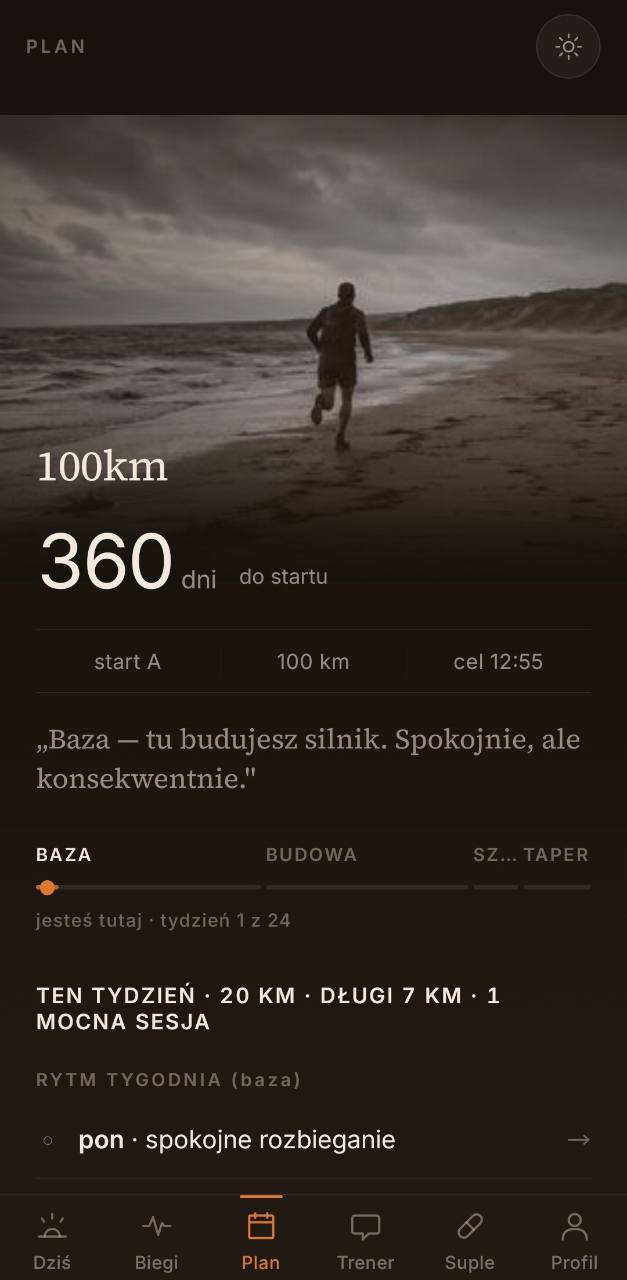
You drop in a race from Strava. AI reads heart rate, pace, the climbs and the heat — and tells you straight up what broke you and what to change for next time. We sell the answer, not the gels.
Same thing every time. Legs like concrete, head empty, pace slipping away.
Everyone's got a theory: "you should've eaten more", "you went out too hard". That's not a diagnosis, it's talk after the fact. Your watch recorded exactly what happened — you just have to read it.

It wasn't a bad day. It was chemistry.
AI doesn't guess.
It reads four clues at once.
One heart rate, one split — that's nothing. What matters is how it all added up over time.
You went out 12% too hard for the first 30 km. Your carb tank was running on fumes long before the finish.
You can't hold it that high for half a race. You were burning reserves you'd need later — and didn't have.
In heat like that you were sweating out 2.5× more salt. Your plan was written for cooler conditions, not 32°C down in the valley.
You were taking salt every 45 minutes. In that heat, past km 50, it needed to be every 25. With every hour the gap grew — until your legs quit, right at km 70.
Four tools. Each answers one question: why.
Free. No account to start. You drop in your data — you get a straight answer, not a survey.
You drop in a race from Strava. AI tells you why you blew up at km 70 — and exactly what to change so it doesn't happen again.
Upload a GPX or pick a race. You get a kilometre-by-kilometre breakdown: when to eat, when to drink, how much salt — in ready-to-grab portions.
The first two days decide your next start. AI tells you what to eat and when to sleep — tuned to how hard you blew up, not generic advice.
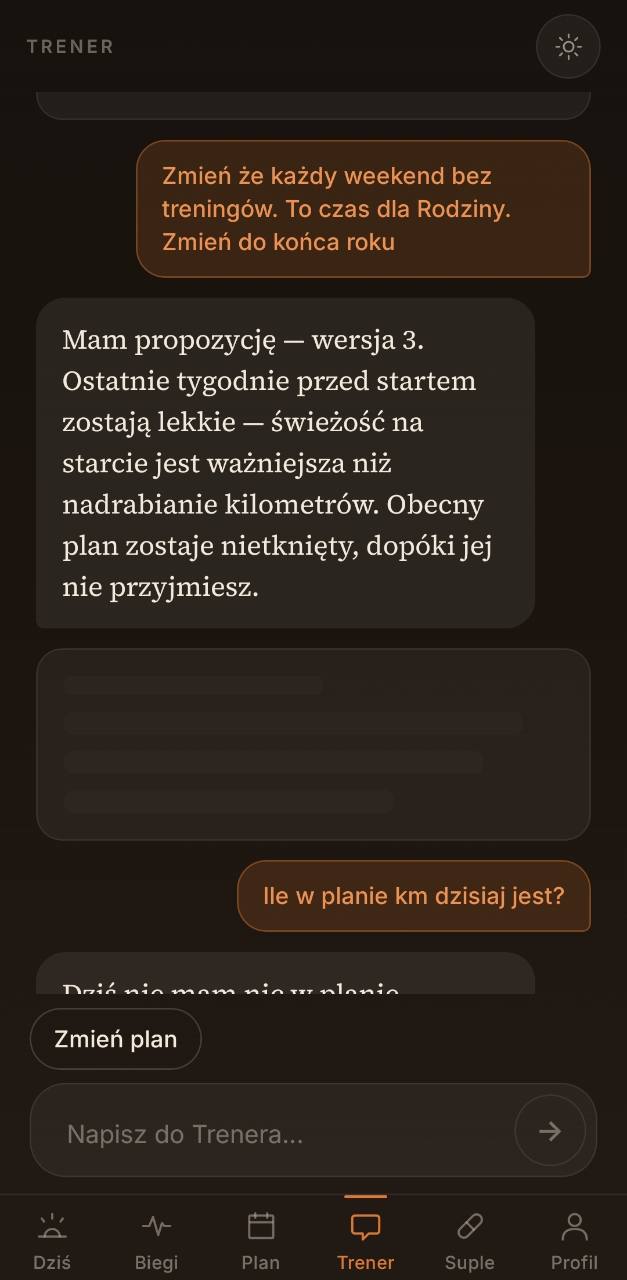
"Why do I get cramps on the descents?" Ask it like you'd ask a mate — get an answer from your own races, not a forum thread from a decade ago.

Sometimes we'll say it straight:
don't buy this.
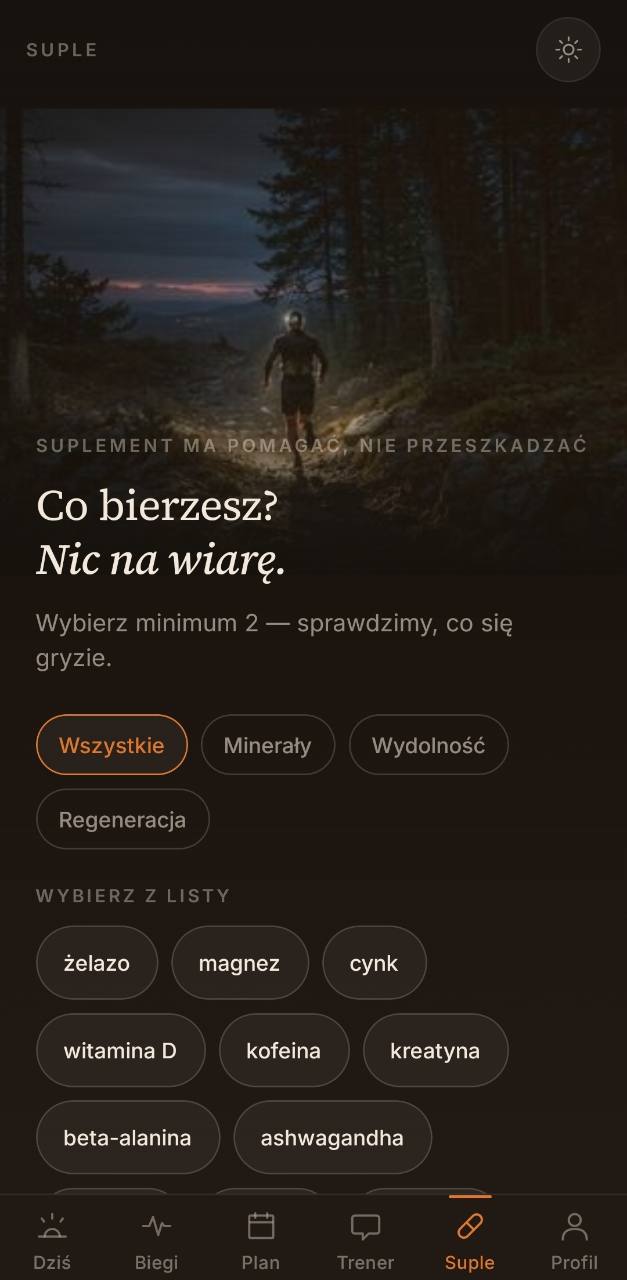
We make our living from supplements, but we won't push them on you. If your problem is gel timing, not a missing product — you'll hear that, plainly. Knowledge first, cart second. Trust is worth more than one gel.
"A stronger gel won't help you. You had plenty of salt — you just went out 12% too hard. Sort out your pacing first. Come back once you've got that down."
The diagnosis is free.
You only pay for the depth.
All the diagnostics no watch will ever give you.
For people who race more than once a season.
For information and performance only — not medical advice and not a medical diagnosis. Consult your doctor or a registered dietitian before changing supplements or nutrition.
The ones you usually ask — answered.
You don't — but without Strava the AI only works with what you type in yourself. With real heart rate, pace and climbing the analysis is 3× sharper. We'll also support GPX, Garmin Connect and Apple Health.
It works for any effort longer than an hour — marathons, triathlons, long runs. The longer you're on your feet, the more variables there are to untangle, and the more you get out of it.
No. It's a diagnostic tool, not a clinic visit. It shows you what happened in your own data and gives you something concrete — but for bigger decisions, talk to a sports dietitian.
From a model that combines your weight, the heat, your time on feet and your heart rate. We build on research into sweat-sodium loss (Maughan 2007, Beis 2011) and calibrate it against what you actually felt in past races.
We keep your watch data encrypted, we don't sell it to anyone, and we don't feed it into anyone else's models. You can export or delete your whole account at any time. Full GDPR detail in the privacy policy.
The first 24 people buy Pro once and have everything for life — no renewals, no subscription. It's our thank-you for trusting us before launch. After the 24th sale we go back to 24 zł/month.
Q3 2026. Android is live from Q2. You can join the iOS early-access list from the mailing list after you download the app.

Next time
you don't have to guess.
Connect Strava, drop in the last race where something went wrong — and see what actually happened. Your first diagnosis takes two minutes.